
How Venue Security Checks Identification: A Security Professional’s Guide
What security staff actually pay attention to during an identification check, why the person presenting the ID matters, and where novelty and prop IDs fit into the picture.
I’ve worked security in Georgia and in downtown environments where checking identification is simply part of the job. From the outside, an ID check can look like a quick glance at a card followed by a nod at the door. In practice, there is usually more going on.
Good security staff do not rely on one tiny detail. They look at the identification, the person presenting it, the situation around the interaction, and the rules of the venue. That combination is what makes an ID check useful.
This guide explains how venue security checks identification from a practical security perspective, without getting into instructions for defeating or bypassing legitimate identification checks.
What This Guide Covers
- Why venues check identification
- What security staff look at during an ID check
- Why the person presenting the ID matters
- What happens when something does not look right
- How ID scanning can add another layer of verification
- How novelty and prop IDs differ from official identification
Why Do Venues Check Identification?
The obvious reason is age verification, especially in bars, clubs, concerts, and other venues where access or service depends on a minimum age. But an ID check can also help a business confirm that the document being presented is consistent with the person using it and that it meets the venue’s requirements.
Every business has its own procedures. Some rely primarily on trained staff inspecting an ID by hand, while others use electronic ID scanning or a combination of both.
For venues using scanning technology, systems such as ID scanning for physical security can provide an additional layer of document and identity verification.
What I Look At During an ID Check
When I’m looking at identification, I’m not trying to memorize every security feature on every ID ever issued. A practical check starts with the basics and becomes more careful if something does not make sense.
Photo
Does the photograph appear consistent with the person standing in front of me?
Dates
I pay attention to the date of birth and expiration date where relevant to the check.
Overall Appearance
Printing, alignment, damage, unusual alterations, or anything that looks inconsistent can warrant a closer look.
Context
The circumstances surrounding the presentation can matter just as much as the card itself.
A good ID check is rarely about one isolated feature. It is about whether the document and the situation make sense as a whole.
The Person Presenting the ID Matters Too
One mistake people make when talking about ID checks is treating the card as though it exists separately from the person holding it.
Security staff are interacting with a person, not just a piece of plastic. The person’s appearance, behavior, answers to ordinary questions, and the circumstances of the interaction can all provide context.
That does not mean security staff should make assumptions based on someone’s appearance or personality. It means an identification check is normally part of a broader access-control process.
What Happens When Something Doesn’t Look Right?
There is no universal response because venue policies and local laws differ. A security employee may ask for another form of acceptable identification, involve a supervisor, deny entry, or follow another procedure established by the business.
The important part is consistency. A venue should have a clear policy so individual employees are not improvising their response every time an identification question comes up.
Security staff also need to remember that an ID that looks unfamiliar is not automatically fraudulent. Different states and countries issue documents with different designs and security features.
Understanding Novelty IDs
If you are interested in the difference between novelty props and official identification, start with our guide explaining what a novelty ID card actually is .
ID Checks Are About the Whole Picture
In my experience, the strongest approach is not to obsess over one supposed “magic test.” Security work is about building a reasonable picture from the information available.
A physical inspection might be enough for one venue. Another business may choose to use an electronic scanner. Some establishments may use additional procedures because of their licensing requirements, internal policies, or the type of environment they operate.
Technology can help, but it does not replace judgment. Staff still need to understand their venue’s policies and know what to do when a document or situation raises a concern.
What About Novelty IDs and Identification Props?
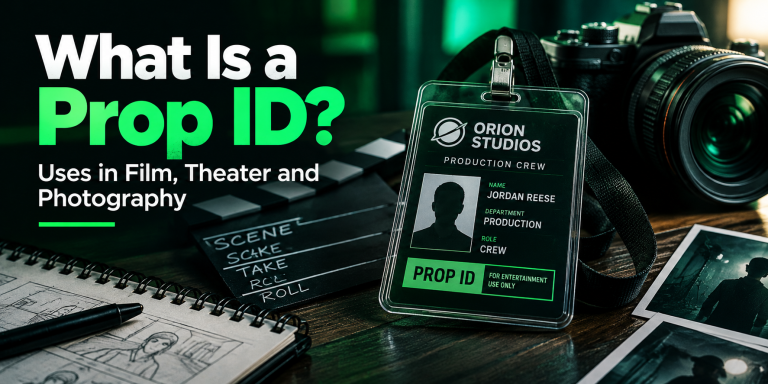
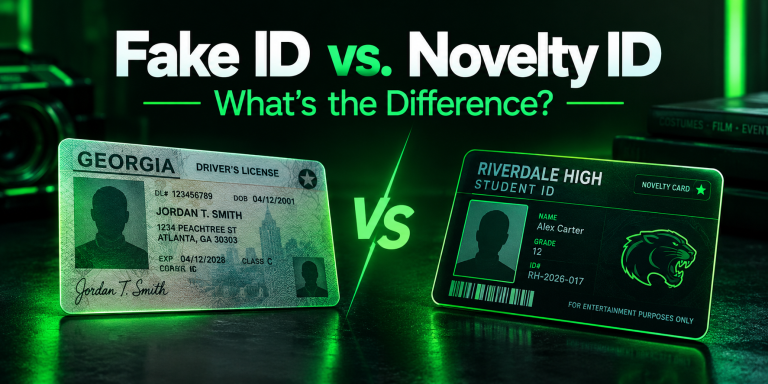
This is where terminology can cause confusion. A novelty ID, replica, or identification prop may be designed for entertainment, photography, film, theater, costumes, collecting, or other legitimate purposes. That does not make it equivalent to a government-issued driver’s license or identification card.
The distinction is important because a novelty item should not be presented as though it were official government identification.
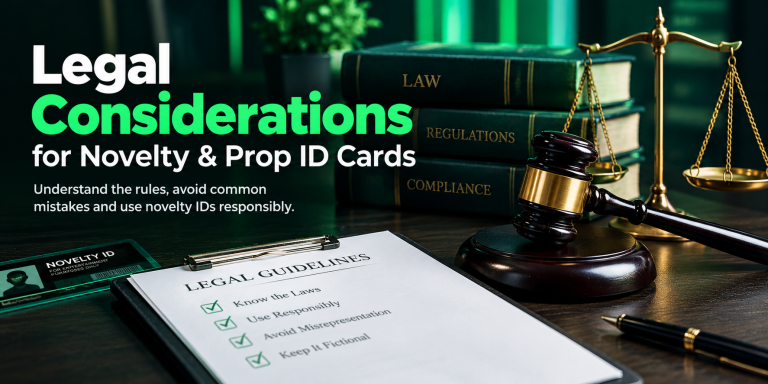
If you are researching the legal side of the subject, our guide to novelty ID laws in the US, UK, and Canada explains why intended use and the way an item is represented can matter.
What Security Staff Notice That Customers May Not
People sometimes assume that security staff are looking for one obvious sign that immediately proves an ID is genuine or fraudulent. Real-world checks are usually less dramatic.
Experienced staff become familiar with the types of identification they see regularly. They also learn to notice inconsistencies, unusual situations, and documents that simply do not fit what they would normally expect.
That experience develops over time. Someone checking hundreds of IDs during busy shifts will naturally become more comfortable with the process than someone doing it for the first time.
Realistic-Looking Is Not the Same as Official
This is especially important when discussing novelty identification props. A prop can be made to look detailed or realistic for a particular creative purpose while still being clearly different from an official government document.
For anyone researching fake ID websites, it is therefore worth understanding exactly what a website means when it uses terms such as “novelty,” “replica,” “prop,” or “custom ID.”
Our guide to fake ID websites and novelty or prop ID websites looks at that terminology from a consumer-information perspective.
Why Experience Matters in Venue Security
Security work involves more than standing at an entrance and checking cards. Staff have to make decisions quickly while dealing with crowds, noise, changing circumstances, and people who may be frustrated about being asked for identification.
That is why training and consistency matter. A venue’s security process should be clear enough that employees understand what they are expected to check and what they should do when something does not meet the venue’s requirements.
The best ID checks are consistent, professional, and based on the venue’s actual policies. You do not need to turn every interaction into a confrontation. If something does not look right, follow the procedure and keep the situation calm.
What I Would Look For From a Novelty ID Website
From a security perspective, one thing I appreciate is when a novelty-ID business is straightforward about what it sells.
- Clear language explaining that products are novelty or props
- Reasonable information about intended legitimate uses
- Transparent product descriptions
- No suggestion that a novelty item is government-issued identification
- Clear separation between entertainment products and official documents
That kind of transparency makes the distinction much easier for customers to understand and is especially important in a subject where terminology can be confusing.
Identification Checks Are About Context
How venue security checks identification depends on the venue, its policies, local requirements, and the tools available to its staff. But the basic principle is straightforward: security professionals look at the identification, the person presenting it, and the circumstances around the interaction.
Novelty and prop identification belongs in a different category from government-issued identification. Understanding that distinction is important for consumers, creators, venue staff, and anyone researching the subject.
Good security is not about making every ID check complicated. It is about knowing the policy, paying attention, and handling questionable situations professionally.