
If you have ever purchased a novelty ID for a costume, film project, themed event, collection, or personal keepsake, you may have wondered: “Is owning a novelty ID actually illegal?”
The answer depends on several factors, including what the item looks like, how it is marketed, where you live, and most importantly, how it is used.
A properly designed novelty ID is generally intended as an entertainment product rather than an official identification document. These items are commonly used for movie props, cosplay, parties, comedy performances, and collections.
The legal issues usually begin when a novelty ID is presented as if it were a genuine government-issued document or used to misrepresent someone’s identity, age, or eligibility for a service.
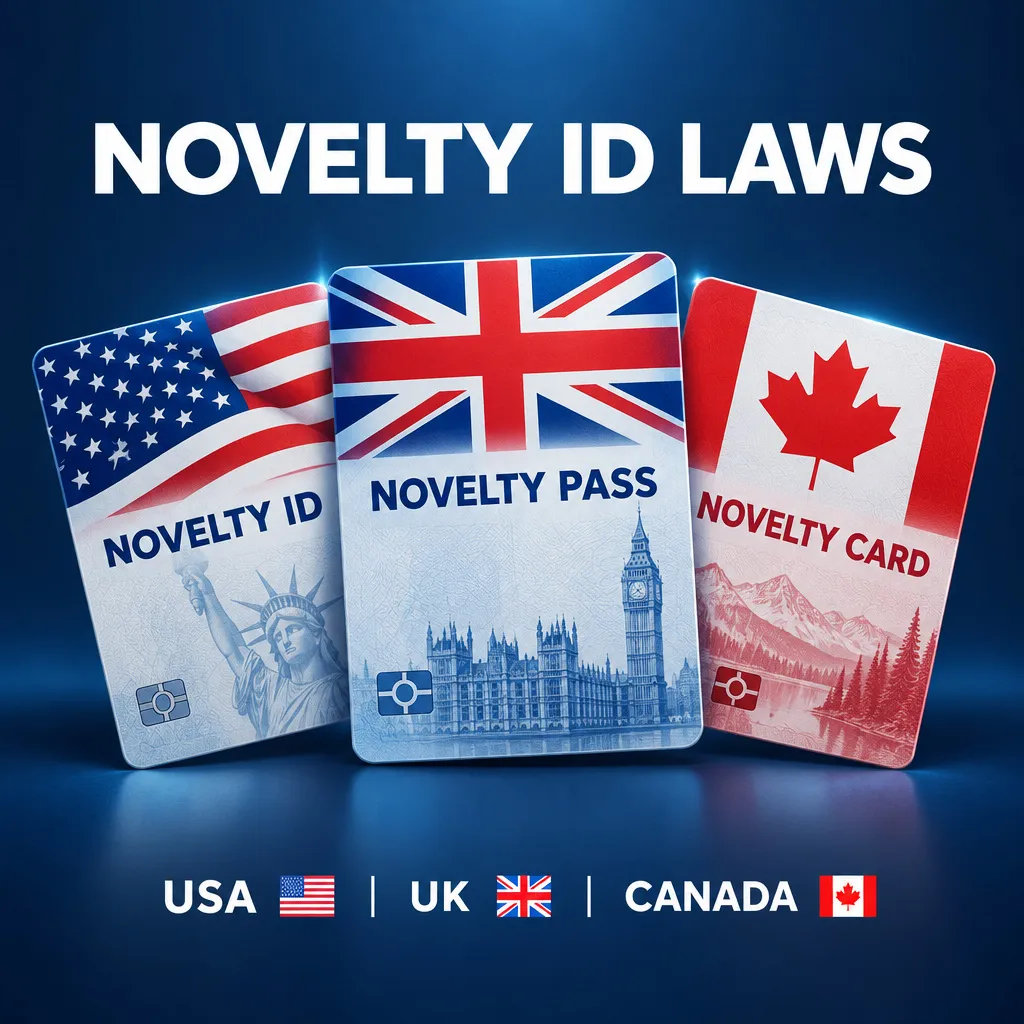
This guide explains the difference between novelty IDs and fraudulent identification documents and explores how the issue is generally approached in the United States, United Kingdom, and Canada.
Disclaimer: This article is for informational purposes only and does not constitute legal advice. Laws vary by location and may change over time.
Understanding the Difference Between a Novelty ID and a Fake ID
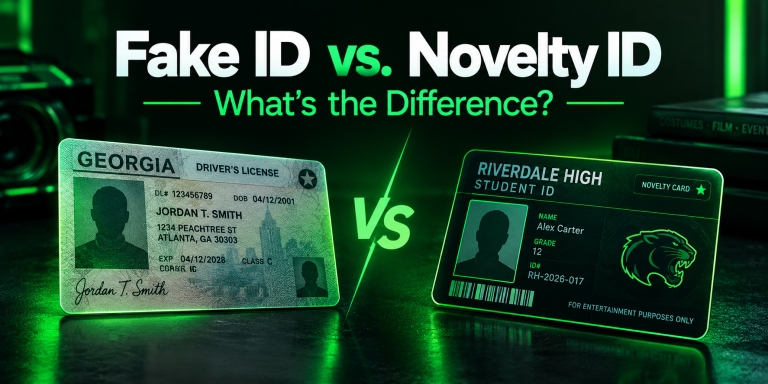
The terms “novelty ID” and “fake ID” are often used interchangeably online, but they can describe very different products.
A novelty ID is typically created for entertainment purposes. Examples include:
- Film and television props
- Costume accessories
- Party items
- Collectibles
- Comedy or theatrical performances
- Creative projects
A responsible novelty ID product should clearly indicate that it is not an official government document. Common wording includes:
- “For Novelty Use Only”
- “Not Valid for Identification”
- “Not a Government Document”
These markings help distinguish a novelty item from a document intended to imitate a legitimate credential.
A fraudulent ID, by contrast, is generally associated with an intent to deceive. Legal concerns arise when someone creates, sells, possesses, or uses a document for the purpose of misleading another person or gaining something they are not entitled to receive.
Possession vs. Use: Why Intent Matters
One of the most important factors in understanding novelty ID laws is the difference between simply owning an item and using it improperly.
Owning a Novelty ID
Owning a clearly marked entertainment product is generally treated differently from possessing a fraudulent identification document.
People may purchase novelty IDs for many legitimate reasons, including:
- A themed birthday party
- A movie production
- A cosplay event
- A collection
- A novelty gift
However, the design and labeling of the item matter. A product that closely imitates an official government document without clear novelty markings may create additional legal concerns depending on the jurisdiction.
Using a Novelty ID
The main legal risks occur when someone attempts to use a novelty ID as though it were real identification.
Examples include:
- Claiming it is a government-issued ID
- Using it to misrepresent age
- Presenting it during official identity verification
- Using it to obtain services through deception
The key question is often not simply “What does the card look like?” but rather “How is it being used?”
United States: State Laws Create Different Rules
In the United States, there is no single nationwide law that covers every situation involving novelty identification products.
Instead, identification-related offenses are usually handled through a combination of federal laws and individual state laws.
Federal Considerations
Federal laws generally focus on issues such as identity fraud, fraudulent documents, and misuse of personal information.
A novelty card created as a prop or entertainment item is different from a document created or used with the intention of committing fraud.
State-by-State Differences
Each state has its own approach to issues involving false identification.
Depending on the circumstances, laws may address:
- Creating fraudulent identification
- Possessing identification intended for deception
- Providing false information
- Using false identification for restricted activities
The consequences can vary significantly based on the state, the purpose of use, and whether any harm or fraud occurred.
Bars, Clubs, and Universities
Businesses have the right to establish their own identification policies. A venue may refuse entry or service if staff cannot verify an ID or believe it does not meet their requirements.
Universities may also have disciplinary policies related to the use of false identification, even when criminal charges are not involved.
United Kingdom: Fraud and False Representation
In the United Kingdom, the legal focus is often on whether someone has made a false representation with dishonest intent.
Simply owning an item designed as a novelty or entertainment product is different from using a document to deceive another person.
When Legal Problems May Occur
A novelty ID may become a legal issue if someone uses it to:
- Misrepresent their age
- Obtain goods or services dishonestly
- Convince another person that it is an official identification document
Businesses that sell age-restricted products or services have strict responsibilities, which is why many establishments take identification checks seriously.
Why Design Matters
A novelty product that clearly identifies itself as a prop or entertainment item is easier to distinguish from a fraudulent document.
The closer an item appears to a genuine government credential without clear novelty indicators, the greater the possibility of confusion or legal concern.
Canada: Federal and Provincial Rules
Canada’s approach involves both federal criminal law and provincial regulations.
Identification fraud issues may fall under federal laws, while areas such as alcohol service and age verification are often governed by provincial rules.
General Legal Principles
A novelty item designed for entertainment purposes is generally different from a document created or used with fraudulent intent.
Concerns can arise when someone:
- Uses false identification information
- Attempts to deceive a business or authority
- Uses a document to gain something through misrepresentation
Provincial Differences
Rules and enforcement practices may vary between provinces.
Businesses may refuse to accept an identification document if they cannot verify it as legitimate. This is particularly common in situations involving age-restricted services.
US vs. UK vs. Canada Novelty ID Overview
| Topic | United States | United Kingdom | Canada |
|---|---|---|---|
| Novelty ID ownership | Generally treated differently from fraudulent documents | Generally different from fraudulent use | Generally different from fraudulent use |
| Main legal concern | Misuse, fraud, and state identification laws | Fraudulent representation | False documents and identity-related offenses |
| Common business response | Refusal of service or confiscation | Strict verification requirements | Provincial policies and verification rules |
| Official identification use | Not accepted | Not accepted | Not accepted |
How to Keep Novelty ID Use Responsible
If you own a novelty ID, these practices help ensure it remains an entertainment item.
Choose Clearly Marked Novelty Products
A responsible novelty ID should make its purpose obvious. Clear labeling helps prevent confusion about whether the item is intended to function as identification.
Do Not Use It as Official Identification
Novelty IDs should not replace passports, driver’s licenses, or other government-issued documents.
Whenever identification is required for a legal purpose, use valid official identification.
Understand Local Regulations
Rules can vary depending on your location. A product that is considered a harmless novelty item in one place may receive different treatment elsewhere.
Use It for Entertainment Purposes
Common appropriate uses include:
- Props
- Events
- Costumes
- Film projects
- Collections
- Gifts
Frequently Asked Questions About Novelty IDs
Can you get arrested for owning a novelty ID?
Legal issues generally focus on fraudulent creation or deceptive use rather than simply owning a clearly marked novelty item. However, laws differ by location and circumstances.
Are novelty IDs accepted as real identification?
No. Novelty IDs are not substitutes for government-issued identification documents.
Can novelty IDs be used at airports?
No. Airports and transportation authorities require valid government-issued identification.
Why do businesses reject novelty IDs?
Businesses may reject novelty IDs because they cannot verify them as official identification or because their policies require government-issued documents only.
Is selling novelty IDs legal?
The answer depends on how the product is designed, marketed, and intended to be used. A clearly marketed novelty product is different from a product promoted for deceptive purposes.
Final Thoughts
Novelty IDs are designed for entertainment, creativity, and collecting—not as replacements for official identification.
The most important distinction is between owning a clearly marked novelty item and using a document to mislead someone. Across the United States, United Kingdom, and Canada, legal concerns generally arise when identification products are used deceptively rather than simply owned as props or collectibles.
For customers interested in novelty products, film props, or collectible designs, choosing clearly labeled items and using them only for their intended purpose helps maintain the difference between entertainment and fraud.
Disclaimer: This article provides general information only and should not be considered legal advice. Laws vary by jurisdiction, and readers should consult qualified legal professionals for advice about specific situations.
Related Guide:
[What Is a Novelty ID Card? A Complete Guide for 2026]