Novelty ID Cards Explained: Design, Materials and Printing
When people discuss novelty ID cards, the conversation often starts with appearance. They want the colors to look right, the text to be readable and the finished card to feel well made. But from my perspective, a good card project starts before printing. You need to understand what the card is for, which material suits that purpose and how the design will look when the final product is in someone’s hands.
My background in venue security has made me appreciate the difference between an object that looks professionally produced and a document that has legitimate identification status. Those are not the same thing. A novelty card is best treated as a fictional, non-official product, whether it is made for a costume, a creative project, a collection or a humorous gift.
In this guide, I’ll walk through the main design and production considerations in straightforward terms. The aim is to help readers understand card quality and make informed creative choices without confusing novelty products with government-issued identification or authorized credentials.
What Is a Novelty ID Card?
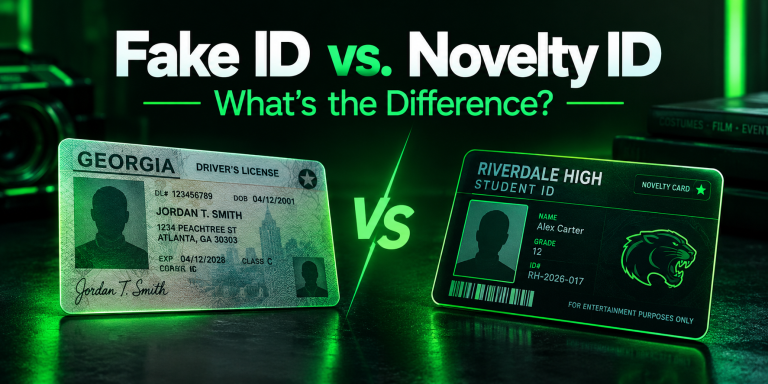
A novelty ID card is a non-official card created for purposes such as entertainment, display, collecting, character design or personal amusement. Depending on the intended project, it may feature an invented organization, a fictional character, original branding or a playful theme.
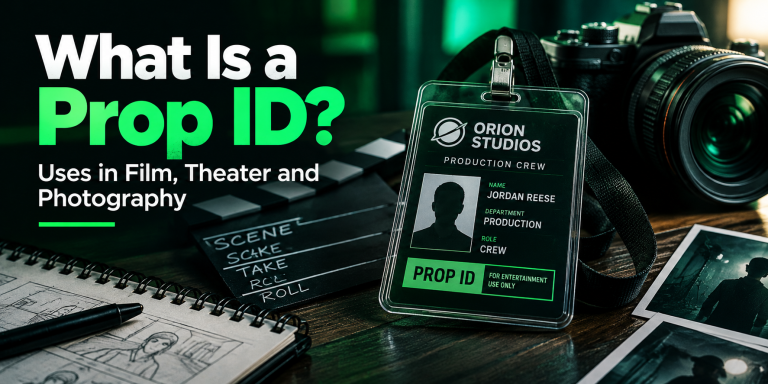
Novelty cards can overlap with prop IDs. A prop ID is generally created for a specific production, scene or character, while a novelty card may be designed as a standalone keepsake or display item. In both cases, the design should make the fictional nature clear.
It is worth understanding this distinction before considering materials or printing. High-quality printing does not give a novelty card official status, and a professionally finished card must not be presented as a genuine government document, proof of age or authorization to access a restricted place.
If you are new to the subject, start with our guide to what a novelty ID card is. It provides a broader introduction to the category and its intended non-official uses.
Start With the Purpose, Not the Material
One of the first questions I would ask about any card project is simple: what will the card actually be used for? A card designed to sit in a display case has different needs from one that will be handled regularly at a costume event or included in a photography project.
For a keepsake, visual appeal may matter most. For a theater production, weight, flexibility and repeat handling may be more important. For a fictional employee badge used in a student film, the design may need to remain consistent across several copies.
Thinking about the use case first helps avoid paying for features that do not add value. It also gives you a clear way to assess suppliers: can they explain their materials, printing process, finish options and limitations in terms you can understand?
- Display or collection: Prioritize attractive artwork, color consistency and a finish that suits the way the card will be stored.
- Costume or character design: Consider comfort, weight, readability and how the card attaches to clothing.
- Film or theater: Think about repeated handling, visual continuity and how the card appears under the project’s lighting.
- Creative design practice: Focus on original branding, typography, layout and a clearly fictional concept.
Common Materials Used for Printed Cards
There is no single material that is best for every novelty card. The right choice depends on the desired feel, expected lifespan, budget and production method. Below are several material categories you may encounter when researching printed cards.
1. PVC plastic
PVC is widely used for plastic cards because it can provide a firm, familiar card feel and support full-color printing. It is commonly associated with membership cards, promotional cards and many standard plastic-card formats.
For a fictional keepsake, PVC may be worth considering when you want a more durable result than ordinary paper. However, quality varies with the card construction and production process. Ask about the material, thickness, surface finish and intended use rather than assuming every PVC card will perform identically.
2. Paper and cardstock
Paper or cardstock can be suitable for short-lived props, classroom activities, mockups and projects where low cost and easy replacement matter more than long-term durability. They are also convenient when the design is likely to change several times before a final version is approved.
The trade-off is that paper-based cards can crease, tear or show wear more quickly than many plastic alternatives. If the item will be handled repeatedly, consider whether the expected lifespan justifies a sturdier option.
3. Composite and alternative plastic materials
Some commercial card products use composite constructions or alternative plastics. These may be selected for particular durability, production or environmental requirements. Their performance depends on the specific material and manufacturing method, so broad claims should be checked against the supplier’s product specifications.
If sustainability is important to you, ask for specific information about material composition, recycled content and disposal options. The word “plastic” alone does not tell you how a product was sourced or what its end-of-life impact may be.
How Printing Methods Affect the Final Result
Printing is another part of the process that influences how a card looks and feels. Different production methods are suited to different quantities, materials and artwork. For a novelty project, the main priorities are usually clear text, consistent colors, clean edges and a finish appropriate to the intended use.
Digital printing
Digital printing can be useful for short runs and designs that need frequent changes. It is often a practical option for prototypes, small creative projects and personalized keepsakes. Before ordering a larger quantity, ask whether you can review a proof or sample of the intended output.
Offset printing
Offset printing is used in many commercial print applications and can be appropriate for larger production runs. The economics depend on setup requirements, order quantity and the complexity of the job. It is not automatically the best option for a small novelty project.
Direct-to-card and other specialty processes
Some plastic-card printers use dedicated processes designed for card surfaces. The suitable method depends on the printer, the card material and the desired result. If you are comparing providers, ask which printing process they use and whether it is appropriate for your particular product.
For a general example of a company offering custom-printed PVC cards, see ID Card Group’s custom PVC card printing information. Its product information can help readers understand the kinds of printing options available in the wider card-printing industry. It is a reference for production methods, not an endorsement of a particular novelty ID provider.
Design Details That Make a Card Look Professional
Materials matter, but design can make an equally noticeable difference. A well-organized layout is easier to read and generally looks more polished than one crowded with decorative elements. In my view, the strongest designs are usually the ones where every element has a clear reason to be there.
Typography and readability
Choose fonts that remain readable at the card’s actual size. Use a clear hierarchy for the title, fictional name, organization and supporting details. Too many typefaces or competing text styles can make a design feel disorganized.
Color and contrast
Colors should support the theme without making the content difficult to read. Dark backgrounds need sufficiently bright text, while pale backgrounds generally work well with darker lettering. Check contrast on a physical proof when possible, because colors can look different on a screen than they do in print.
Spacing and alignment
Give text and graphic elements enough room to breathe. Keep margins consistent and avoid placing important design elements too close to the card’s edge. A simple layout with balanced spacing often looks more professional than a crowded design with unnecessary detail.
Original fictional branding
Use invented names, original logos and clearly fictional organizations. Avoid reproducing government seals, official document layouts or design elements intended to make the card appear to be an authentic credential. The creative goal is a convincing fictional concept, not confusion about the card’s status.
Finishes: Glossy, Matte and Other Options
Finishing refers to the surface appearance and treatment of the printed card. A finish can influence glare, texture, perceived color and the way the artwork looks under different lighting conditions.
| Finish | Typical appearance | What to consider |
|---|---|---|
| Glossy | Smooth surface with noticeable shine | Can make colors appear vivid, but reflections may be distracting in photographs. |
| Matte | Lower-shine, subdued appearance | May reduce glare and suit understated designs. |
| Textured | Surface with a tactile effect | Availability and durability vary by supplier and material. |
| Protective coating | Additional surface protection, depending on product | Ask what protection is provided and whether it changes the card’s appearance. |
Do not select a finish based on its name alone. If appearance is important, ask for representative samples or clear photographs. A supplier should be able to explain the available options and any limitations relevant to the product.
How to Evaluate a Card Supplier
When comparing suppliers, I would focus on clear information and realistic expectations rather than dramatic marketing promises. A professional provider should explain what is being sold, what materials are offered, how the design process works and what the customer can expect.
- Product clarity: Is the card described as a novelty, fictional prop or other non-official product?
- Material information: Does the supplier identify the material and explain the available finishes?
- Proofing process: Can you review the artwork before production begins?
- Pricing transparency: Are setup fees, shipping, minimum quantities and other charges explained?
- Customer support: Is there a clear way to ask questions about the product and order?
- Privacy: Does the supplier explain how submitted personal information and design files are handled?
- Reasonable claims: Does the provider avoid implying that a novelty product can replace official identification?
These checks are useful whether you are buying a single creative keepsake or researching a company for a larger project. They also make it easier to compare providers on a consistent basis instead of relying on appearance alone.
For more context, read our guide to what to know about novelty and prop ID websites, which discusses how to approach this category with care.
Novelty Cards, Official Documents and Responsible Use
One distinction deserves special attention: a card’s material, printing quality and visual finish do not determine whether it is an official document. That status comes from the relevant issuing authority and applicable rules, not from the card’s appearance.
From my perspective, clear boundaries matter. A fictional card can serve a creative purpose without being represented as a real driver’s license, government-issued identification, proof of age or access credential. Original branding and visible prop wording can help communicate the intended context.
Rules concerning novelty products can vary by location and circumstance. Before buying, displaying or using a card in a particular setting, check the rules that apply there. Our guide to novelty ID laws in the US, UK and Canada offers additional background, but it is not a substitute for legal advice.
Frequently Asked Questions
What is the most common material for plastic cards?
PVC is widely used for commercial plastic cards, but other materials and composite constructions are available. The best choice depends on the product’s purpose, expected handling, budget and supplier specifications.
Is glossy or matte better for a novelty card?
Neither finish is universally better. Glossy surfaces can make colors look vivid, while matte finishes can reduce shine. Consider the artwork, lighting and intended use before deciding.
Can I use a general design tool to create a novelty card?
Yes. A general design tool can be suitable for original fictional artwork, mockups and creative keepsakes. Check the printing provider’s file requirements and ensure the finished design is clearly non-official.
What should I ask before ordering printed cards?
Ask about materials, thickness, finishes, minimum quantities, proof approval, production time, shipping costs, revision policies and how your submitted information is handled.
Does a professionally printed novelty card become official identification?
No. Printing quality and materials do not confer official status. A novelty or fictional prop card should not be used as a substitute for valid identification or proof of age.
Final Thoughts
Choosing materials and printing for a novelty ID card is easier when you begin with the project’s purpose. PVC, cardstock and other materials each have different practical considerations. Printing methods, color choices and surface finishes can then be selected to suit the intended result.
My advice is to look beyond promotional photographs. Read the product specifications, ask questions, review a proof when available and compare suppliers on transparent information rather than assumptions. A thoughtful design and a clear understanding of what you are buying are more useful than unnecessary features.
Most importantly, keep the distinction between fictional props and official identification clear. A novelty card can be a well-designed creative product without claiming to be something it is not.